
Austin County Mugshot Record Status
A booking photograph documents appearance at intake. It belongs to the arrest or jail file, not to a finding of guilt. Release does not automatically erase it. Yet Texas law does not make every photo available in every case. The Texas Public Information Act begins with public access and also protects information covered by law-enforcement, juvenile, privacy, security, expunction, nondisclosure, and other rules.
Texas Attorney General decisions show why the answer is fact-specific. Open Records Decision 616 required disclosure of a conviction-related mugshot in the closed-investigation facts it considered. In OR2012-13406, photos in a pending matter could be withheld while bond and release or transfer notations were treated as basic arrest information. The sound request asks for the image and lets the Austin County Sheriff identify any claimed exception.
Austin County Released Mugshot Channels
No one source covers every Austin County booking photo. The sheriff holds local booking material. TDCJ covers state prisoners, but its ordinary offender-information email expressly does not provide photos. DPS may display a registration photo only for a person with a legal registration duty. Federal locators are not local booking-photo archives.
| Channel | Has Photo? | How to Access |
|---|---|---|
| ACSO roster or release feed | No official display was located | Do not substitute a current roster or commercial gallery |
| ACSO records request | Possible, subject to law and case facts | Request the booking photograph with the named booking record |
| Sheriff mobile app | No official Austin County release app found | Verify developer and sheriff ownership before trusting any later app |
| TDCJ information email | No | The basic email channel supplies offender data but excludes photographs |
| DPS public registry | Only for covered registrants | Use the official registry for its limited statutory purpose |
| News or copied sources | Sometimes | Treat as an unverified lead and trace the image back to its date and source |
| BOP, USMS, or ICE locator | Not a local booking-photo path | Use each federal tool only for its own custody function |
Note: No online photo result does not prove that Austin County destroyed or never made the booking image.
No Austin County Mugshot Feed
The Austin County Sheriff jail page, public-information page, county directory, and site map were checked. No official current roster, release archive, 24-hour list, 72-hour list, photo field, or release-oriented mobile app was found. The correct finding is “no published feed located,” not “no photo exists” and not “no one was released.”
The sheriff does publish a public-information request path. That makes the records office the main official discovery channel. A person who left the Austin County-facing system may also have been transferred. Women are temporarily housed through the Fort Bend County Jail system, while other people can move to TDCJ, federal custody, ICE, another county, a hospital, or another institution. Confirm the custodian before requesting its photo.
For recent timing rather than the photograph itself, the Austin County 24-Hour Releases page explains the official jail, IVSS, records, and court fallback.
Request Austin County Booking Photos
Use the packet linked by the Austin County Sheriff’s Public Information page. Ask for an existing image tied to a specific booking, not for the agency to research a theory or create a new report. Give enough identifiers to avoid a namesake, and ask separately for the booking and release entries so the image can be tied to the right event.
- Identify the booking. Provide the full name, date of birth, booking date or narrow date range, and booking or case number when known.
- Describe the records. Request the booking photograph, booking sheet, intake and release date and time, release code or authority, bond information, and transfer destination or receiving agency.
- Choose a submission channel. Email rikkiv@austincountyso.org, fax 979-865-8271, or mail the request to Austin County Sheriff’s Office, Attention Rikki Vacek, 417 N. Chesley Street, Bellville.
- Confirm the mailing ZIP. The PDF prints 77474 while the current office directory gives 77418. Ask the office before mailing rather than guessing.
- Ask for electronic copies. If any item is withheld, request the applicable legal exception. The agency need only produce records that exist.
- Respond to a cost estimate. The posted procedure requires action within ten business days on an estimate over $40 or treats the request as withdrawn.
For 50 or fewer paper pages, the posted schedule lists $0.10 per page plus postage. Larger or other work can add copy media, labor at $0.25 per minute, overhead equal to 20 percent of labor, and actual postage. Payment rules can apply before work begins. Texas Government Code section 552.221 requires prompt production within a reasonable time, but it is not a universal ten-day delivery promise.
Austin County Photo Disclosure Rules
The official Open Records Decision 616 is useful because it addresses a conviction-related booking photo in a closed investigation. Its result should stay tied to those facts. It does not establish that all Texas mugshots must always be released.
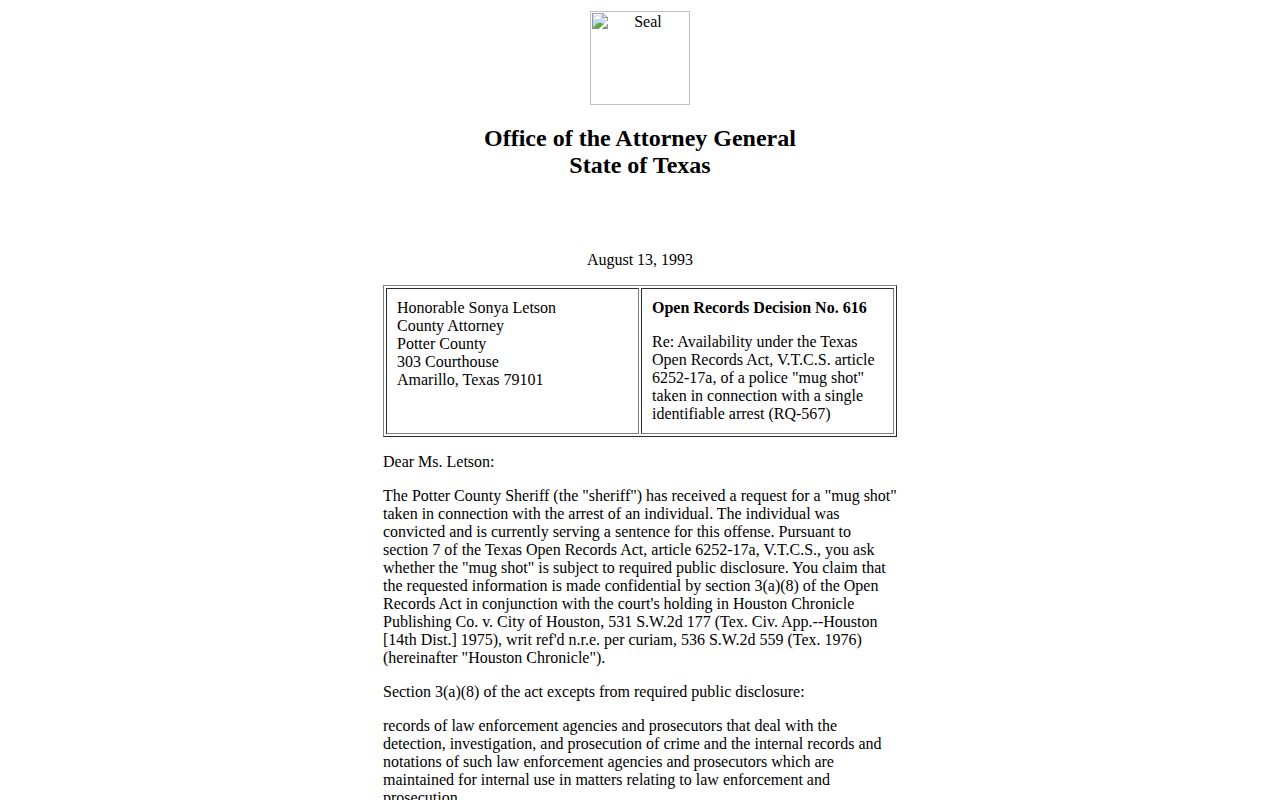
The decision supports a focused request while leaving Austin County to evaluate the actual case, restrictions, and responsive record.
Austin County Mugshot Policy Details
Angle P is the core local result. ACSO offers no roster-photo or release-photo display. TDCJ’s ordinary information email also says it does not supply photographs. For a local Austin County arrest, the practical official route is a narrow sheriff request that identifies the booking and asks for the photo as a distinct item.
A separate Attorney General letter illustrates the boundary. The OR2012-13406 ruling treated bonding and release or transfer notations as basic arrest information in its specific matter while allowing responsive photographs to be withheld during the pending investigation.
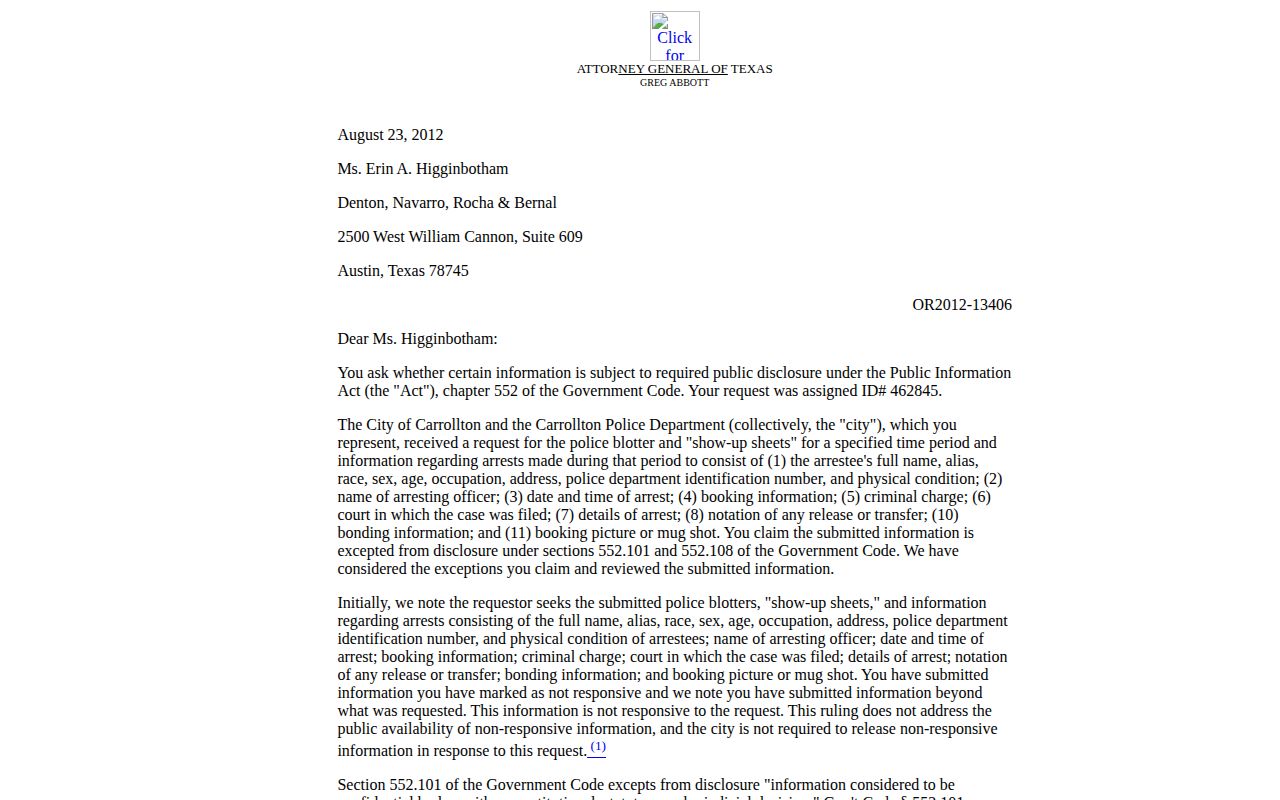
This distinction means an Austin County release record may be available even when the requested image is disputed or redacted.
Austin County Photos Across Systems
A person transferred from Austin County Jail into TDCJ has not been released to the community. The TDCJ offender search can establish state custody, offense, sentence, location, parole fields, and later status, but the basic inmate-information email does not provide a photo. A DPS registry image may exist only when the person is subject to registration. Registry presence proves that limited status, not the exact jail release date.
BOP’s locator reports federal custody or a release date for covered former federal prisoners but is not a photo archive. The U.S. Marshals Service limits prisoner photos and movement data. ICE locator images should not be assumed. A Fort Bend photo, when Austin County confirms temporary female housing, may belong to a receiving-custodian record while Austin County retains the originating booking and case trail.
Austin County Mugshots in News
Sheriff news posts or local reporting can carry an incident image. A copied photo can also remain on an outside page long after the person left custody or the case changed. Those pages are discovery leads only. Check the publication date, caption, originating agency, charge, and final court disposition. Do not infer present custody, release time, guilt, or a current case status from an old image.
No commercial mugshot publisher or removal service is linked here. A copied image should be traced back to the Austin County Sheriff, another true custodian, or the court record. If the copy is false or stale, preserve the URL and screen, then use the source’s correction path and the Texas process that applies to covered publication.
Correct Austin County Mugshot Records
Texas Business and Commerce Code chapter 109 creates a narrow correction and removal framework for certain businesses that publish criminal-record information, including arrest photographs. It is not a ban on all mugshot sites or all fees. Covered publishers must provide a dispute contact, verify without charge, complete the review within 45 business days, correct or remove qualifying errors without a fee, and give notice after the inquiry. The chapter also addresses known qualifying expunction and nondisclosure orders.
The official chapter 109 text supplies the exact scope, duties, thresholds, and exceptions.
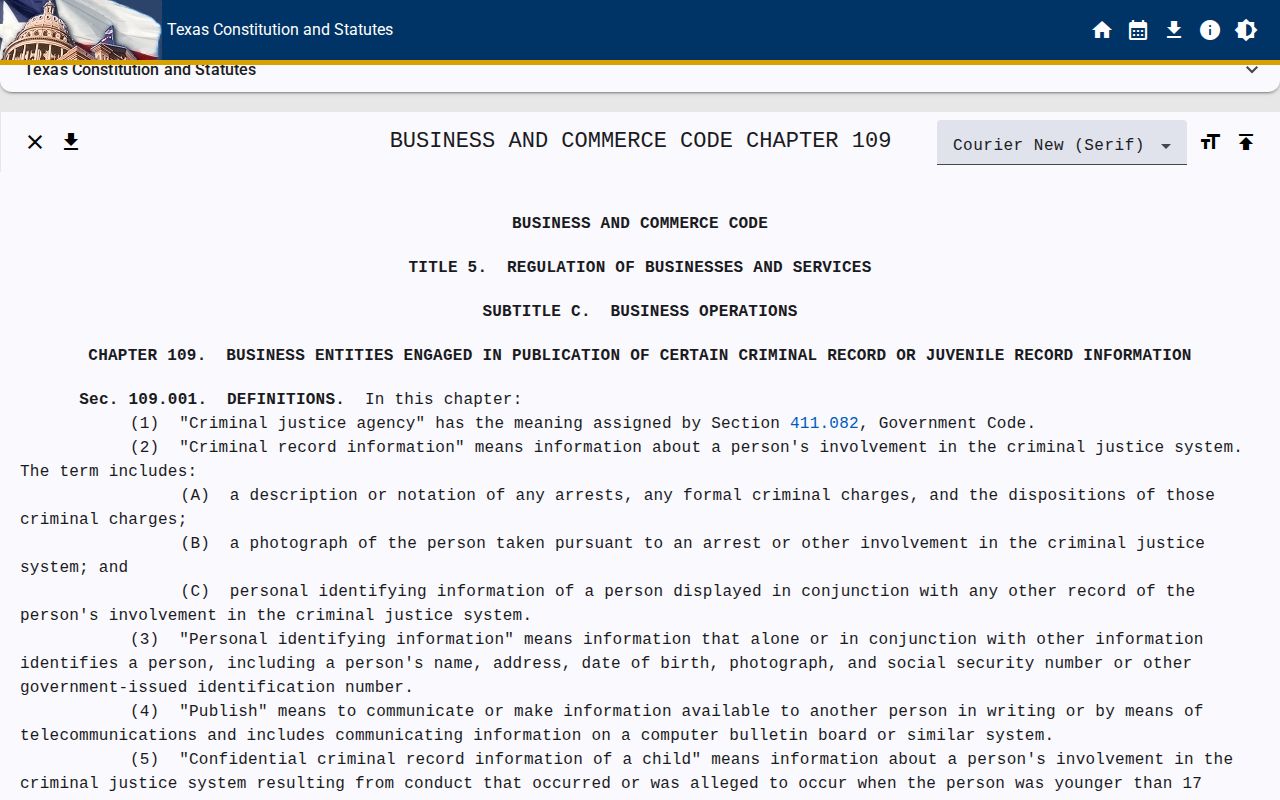
The screen documents the state-law route for covered erroneous commercial publication without endorsing a paid removal business.
Public-record and FCRA notice. An arrest image does not establish guilt. This privately operated resource is not a consumer reporting agency under the Fair Credit Reporting Act, and mugshot information may not be used for an FCRA-covered purpose. Verify any record with its originating agency.
Austin County Mugshot Restrictions
Expunction under Texas Code of Criminal Procedure chapter 55A can require destruction or removal of eligible arrest records. An order of nondisclosure under Government Code chapter 411 usually restricts public disclosure while preserving access for specified government and criminal-justice users. Eligibility depends on the charge, outcome, dates, history, waiting periods, and statutory exceptions. Release alone creates neither remedy.
Juvenile records follow separate confidentiality rules. Active matters can also raise law-enforcement exceptions. When the government source is wrong, use the originating agency or Texas DPS correction process. When a qualifying court order exists, send the order to each agency or covered publisher identified in that legal process. A public absence after restriction should be respected, and no one should promise that one request erases every copy.